General Description
A medium-sized dog with short, smooth coat and tight skin. A square, proportional build, strong limbs, and well-defined muscle mass that displays confidence and power. The head is broad and square with well-rounded cheeks. The muzzle is short and wide and the dog should be slightly undershot. The Olde English Bulldogge is very agile, devoid of any breathing complications; males are natural breeders and females are natural whelpers.
Temperament
Expected to show a lot of drive. Loyal, eager to please, courageous, protective but not vicious. An excellent family pet. Aloof and standoffish with strangers, which should be viewed as a visual deterrent. The breed requires firm, consistent handling to match their determined nature. As with any breed, both owner and pet benefit from proper obedience, and the knowledgeable handler gets the most enjoyment from their dog.
Size
Height: 17 to 20 inches at the wither.
Weight: proportionate to body size.
In comparison of males and females, due allowance is given to the female, as she is not expected to bear the breed characteristics to the same degree of excellence as the male.
Coat and Colour
Smooth, short, tight coat. Any colour is accepted; however, colour is to be the last consideration when choosing a breeding specimen or pair.
Pigmentation
Full pigmentation is required around the eyes, on the nose, and on the lips.
Head
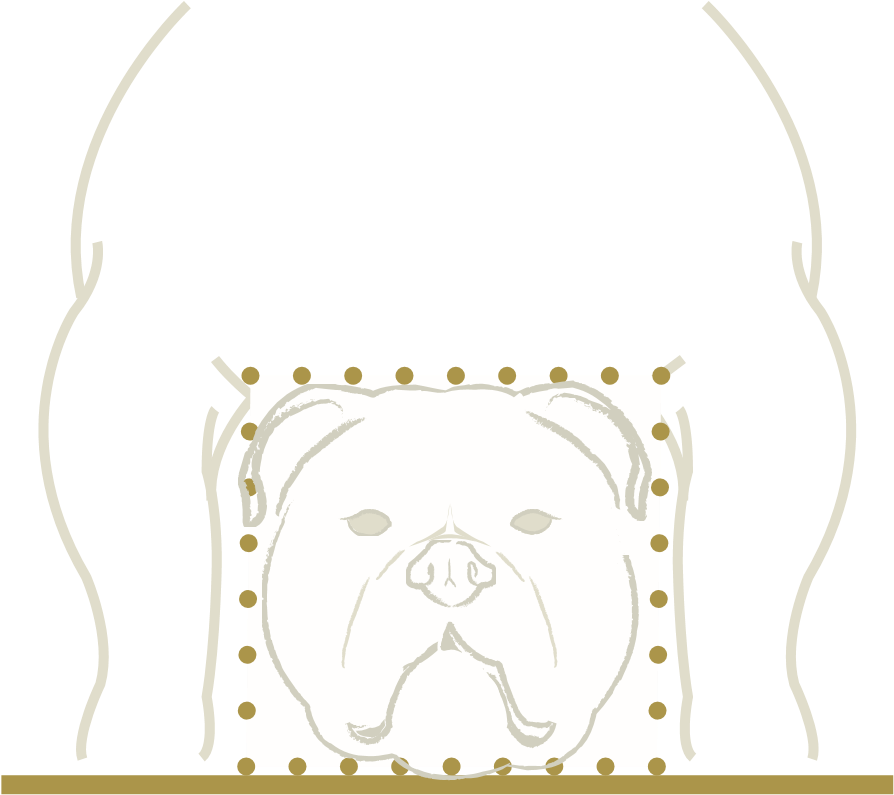
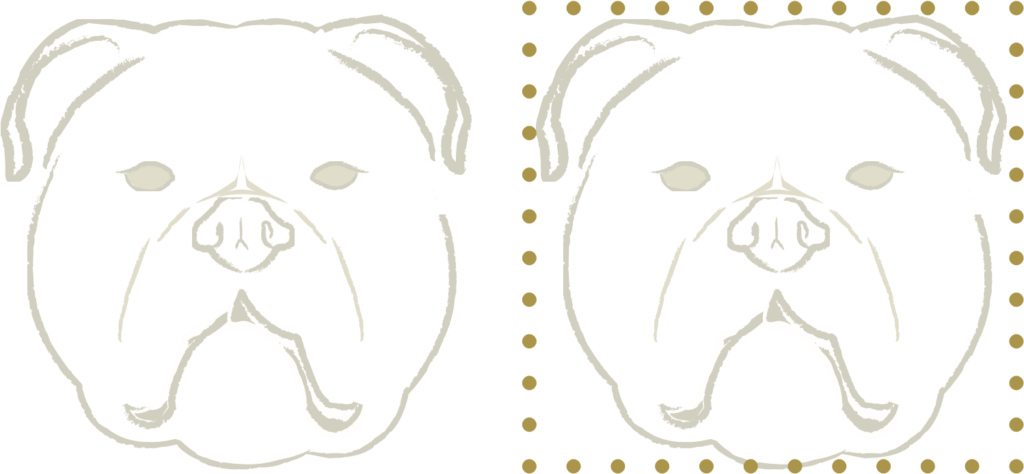
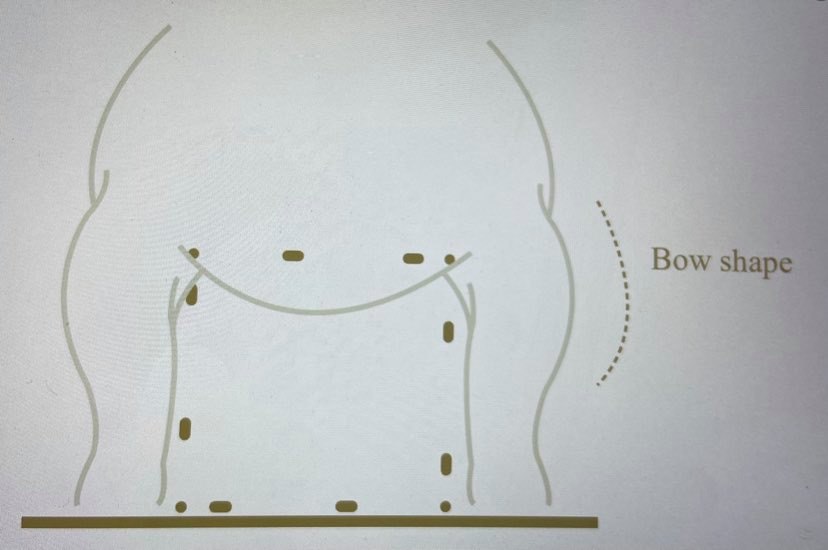
The size of the head is determined by the square created between both legs, chest, and ground, and should fit neatly inside that square. The head is broad and square with well-rounded cheeks. The forehead should be flat, not rounded, domed, or overhanging the face.
Muzzle
Wide and short (no shorter than 1½ inches), but breathing should not be impeded.
Nose
Fully pigmented with nostrils wide and open.
Eyes
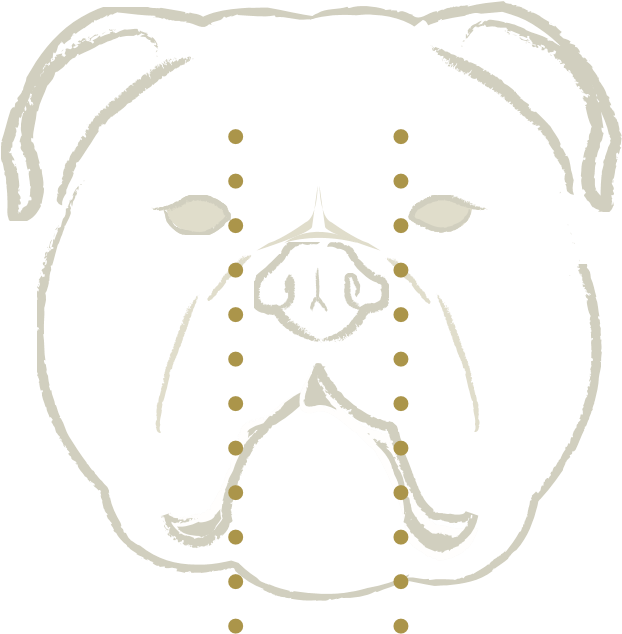
Wide set, almond-shaped eyelid, not overly large. Positioned on the head so the inner corner of the eye aligns with the outer sides of the bottom jaw. Any colour is acceptable.
Bite
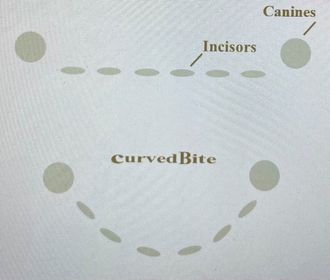
Slightly undershot, but lower canines should not protrude. Teeth preferably set straight across the front of the bite rather than in a curve.
Ears
Preferred are well-set rose ears; also acceptable are button and small drop ears.
- Rose ear: a very small drop ear that folds back, set level with the skull.
- Button ear: a small semi-erect ear that folds forward nearly to the skull, obscuring most of the ear canal.
- Drop ear:a small ear that hangs to the side of the skull, proportional to the dog's head size; should not resemble a hound's ear.
Neck
Well arched, short to medium length, thick and strong.
Chest and Forequarters
The properly proportioned chest creates the square between the legs and comes down level with the elbows. Forelegs are wide set, straight, with thick bone, well developed so they create a bowed shape on the outside while the inner forelegs are not curved and form a square between both legs, chest, and ground. Shoulders are wide for stability and power, with excellent muscle definition.
Hindquarters
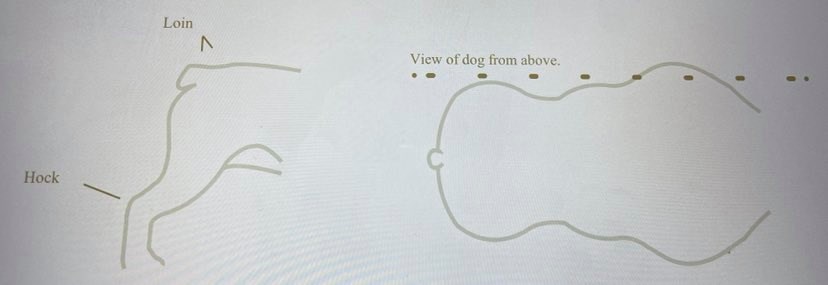
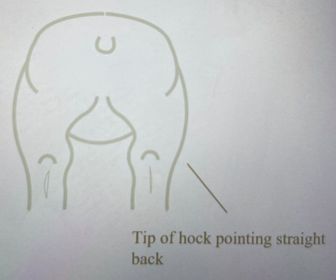
A minor bend in the hock. Hind legs are slightly longer than the forelegs and, as a result, position the loins above the shoulders. From the loin to the hock should be long and muscular. Hindquarters slightly less wide than the shoulders. Viewed from behind, the tip of the hock should point straight back.
Movement
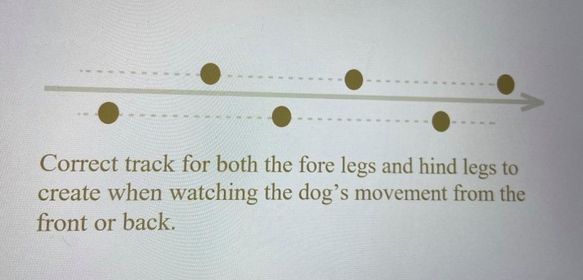
The dog should move fluidly, light on its feet, with front feet moving on the same track as the back feet. Legs should not cross or wing when running. The hock stays facing straight back when the dog is in motion.
Feet
Proportional to body, compact, with high knuckles, and straight.
Tail
Docked tails are preferred. Natural tails should not measure any longer than the distance to the hock.